Bats are one of the most feared and misunderstood creatures, but they are extremely important to environments all over the Earth.

The lesser short-nosed fruit bat is found in Southeast Asia and has an affinity for mangoes. (https://en.wikipedia.org/wiki/Lesser_short-nosed_fruit_bat)
What are Bats?
Bats are a type of mammal and are in the order, Chiroptera. They are one of the most diverse types of mammals with over 1,300 known species. They are found nearly everywhere on Earth, with the exception of Antarctica and the Arctic. Bats can be found in nearly every type of habitat and are even a common site in cities.
The vast majority of bats are nocturnal, meaning they are active at night. Bats often roost in caves or hollow parts of trees during the day and come out at night to feed. Different species of bats have different diets. Many bats feed on insects, fruit, and pollen. Some bats are predators and eat small animals such as rodents, reptiles, and fish. The vampire bat is unique as it feeds on the blood of sleeping animals.
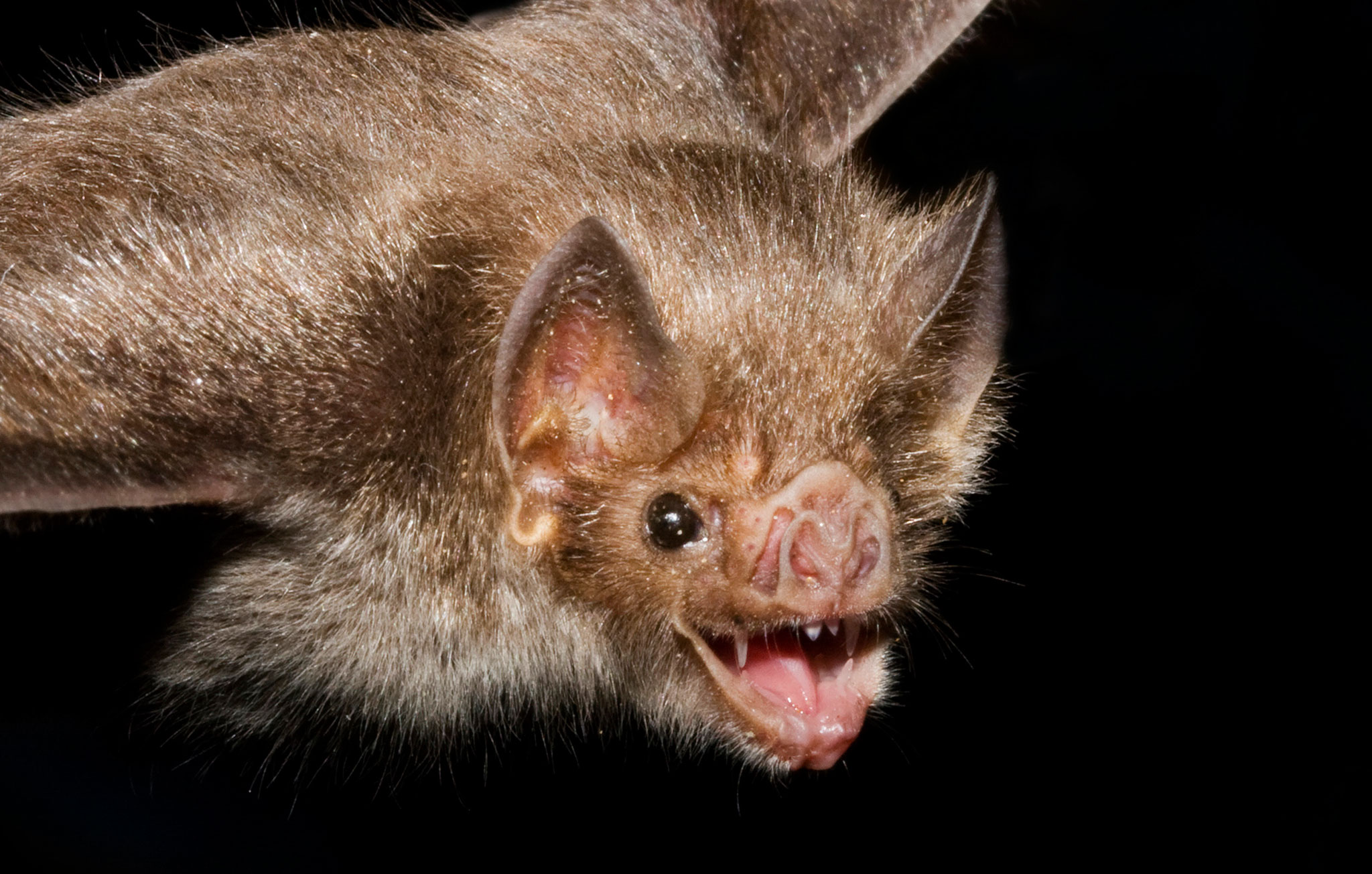
Vampire bats feed on the blood of sleeping mammals and birds. They bite the animal and lick up the blood from the wound. They need to eat a lot and have even been known regurgitate blood to feed other hungry bats. They are found throughout Latin America. (https://www.nationalgeographic.com/news/2015/11/151117-vampire-bats-blood-food-science-animals/)
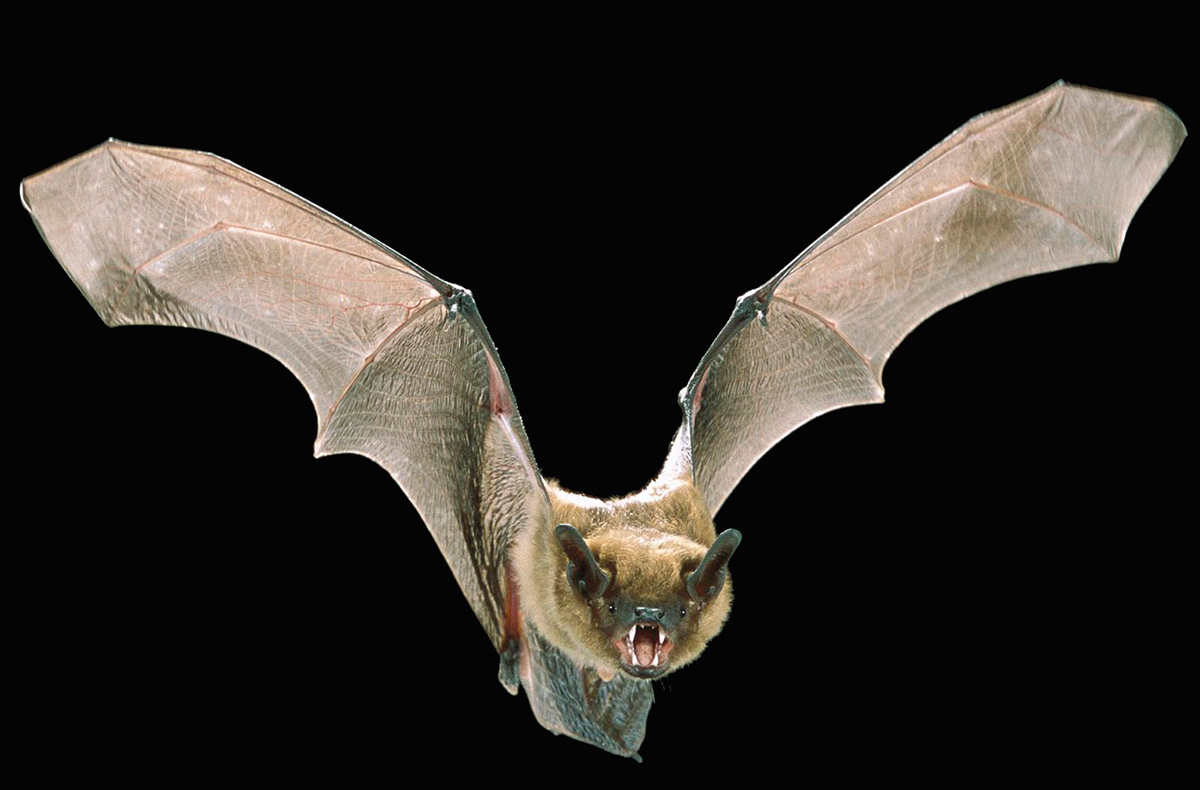
The big brown bat eats insects including mosquitoes, gnats, beatles, and moths. Each bat can eat up to 1,200 insects an hour, helping to control insect populations. This bat is found throughout North America. (https://whyfiles.org/2013/stopping-the-slaughter-of-the-bats/)
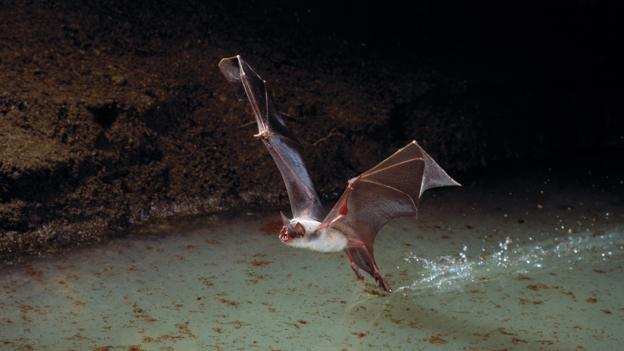
The greater bulldog bat is found in South America and feeds on insects during the wet season and fish during the dry season. (http://www.bbc.co.uk/earth/story/20160331-the-worlds-loudest-animal-might-surprise-you)
Bats are the only type of mammal that can fly. Their forelimbs have been modified into wings that can sustain flight. They have the same type of bones in their wings that we have in our arms. Their bones have been elongated and have a thin membrane of skin stretching between them. Their wings do not generate as much lift as bird wings, but their wings are more flexible and allow them to be more maneuverable.
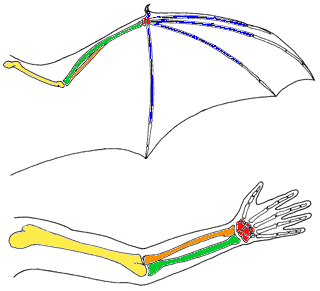
This image shows how human arms and bat wings have the same types of bones but they have been modified for different uses. (http://www2.ville.montreal.qc.ca/biodome/mvc/sitetexte/index.php?lg=en§ion=121chiropteres&lemenue=12)
Bats have a heightened sense of hearing. Many species are able to emit ultrasonic sounds with their nose or mouth. These sounds are quite loud but are at a frequency that is too high pitch for our ears. Bats can hear the echoes of these sounds. This helps them picture their surroundings and allows them to navigate in the darkness and to find food.
Bats come in a variety of sizes. The largest bats are the flying foxes, which can have a wingspan of up to 6 feet and can weigh around 3 pounds. The smallest bat is the bumblebee bat which has a wingspan of 6 inches and weighs 0.07 ounces.
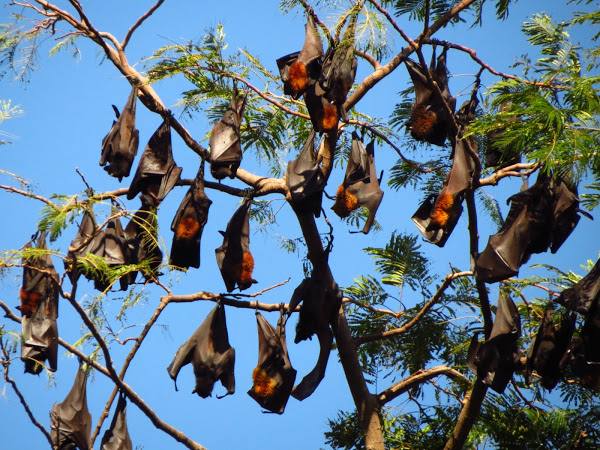
The golden crowned flying fox is the largest bat in the world and is found in the Philippines. It feeds on fruit. (https://www.projectnoah.org/spottings/552656003)
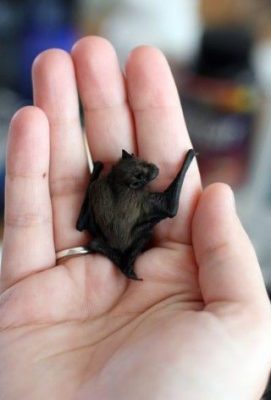
The bumblebee bat is the smallest mammal in the world. It feeds on insects and lives in Thailand. (http://animalstime.com/bumblebee-bat-facts/)
Bats Role in the Environment
Bats play a critical role in the environment. Many bats are pollinators and feed on nectar. They spread pollen between plants and help them reproduce. (For more on pollinators check out my post on pollinators https://wordpress.com/read/blogs/163426106/posts/38). After plants have been fertilized they produce fruit to attract animals to spread their seeds. Fruit bats are very important in this process. When they eat fruit the seeds pass through their digestive system and are spread throughout the environment through their excrement. Insect eating bats can be helpful for humans. Bats can eat between 50% and 100% of their body weight in insects. These insects include pests that cause damage to crops and gardens. They also feed on mosquitoes which can carry disease, as well as gnats which can be very annoying when trying to enjoy the outdoors. Without bats preying on these insects their numbers would increase and they would cause even more problems than they already do.
Bat Conservation
Bats face many threats to their survival. One of the main threats is habitat destruction and the destruction of their roosting sites. Many bats are killed by humans because they are misunderstood and feared. Bats are not dangerous to humans and are fearful of humans. A major problem in North American bat populations is White Nose Syndrome. This is caused by a fungus that infects hibernating bats. This fungus grows on the bat’s nose and causes bats to wake up more often during hibernation. This causes bats to use their fat stores too quickly and they starve to death before the end of hibernation.
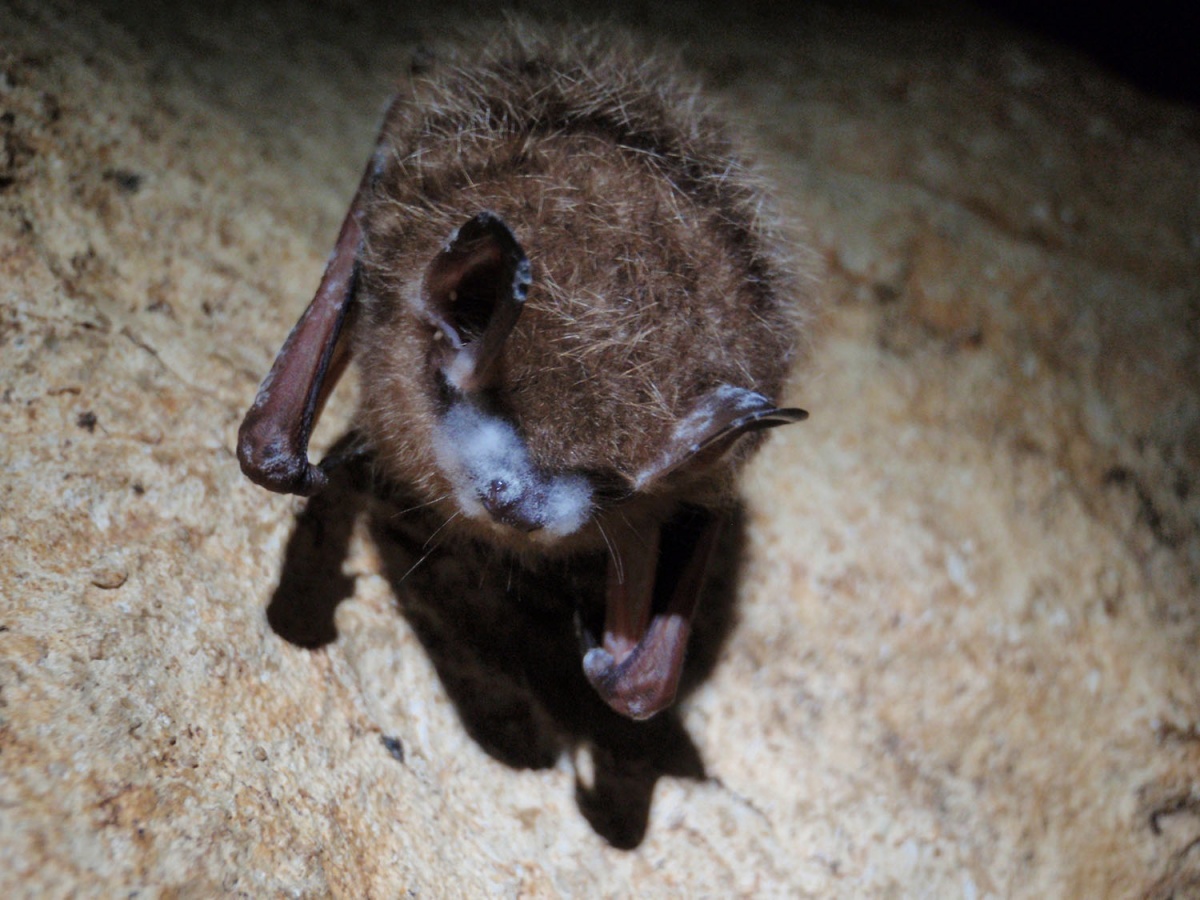
A bat with white-nose syndrome. This fungus has devastated populations of some North American bat species. (https://www.doi.gov/blog/13-facts-about-bats)
How to Help
There are a few ways to help bats. One way is to not disturb hibernating bats. Try not to explore caves when bats are hibernating. This can cause bats to wake up from their deep sleep and use their fat stores too quickly. It is also important not to cause white nose syndrome to spread. While the fungus does not affect humans it can be carried by humans. Make sure to disinfect clothing and shoes worn in a cave before going to another cave. You can do this by putting clothing in water that is 140° F. for twenty minutes. Another way to help bats is to build bat houses. These provide roosts for bats and can help them survive if their natural roosts are destroyed.
References
Bradford, Alina. “Bats: Fuzzy Flying Mammals.” LiveScience, Purch, 24 Oct. 2018, http://www.livescience.com/28272-bats.html.
“Bat.” Wikipedia, Wikimedia Foundation, 27 June 2019, en.wikipedia.org/wiki/Bat.
Harris, Tom. “How Bats Work.” HowStuffWorks, HowStuffWorks, 1 June 2001, animals.howstuffworks.com/mammals/bat1.htm.
Sartore, Joel. “Common Vampire Bat.” National Geographic, 21 Sept. 2018, http://www.nationalgeographic.com/animals/mammals/c/common-vampire-bat/.
“How Many Bugs Does a Bat Eat in a Night?” Reference, IAC Publishing, http://www.reference.com/pets-animals/many-bugs-bat-eat-night-4725d224c321716.
“Bat.” San Diego Zoo Global Animals and Plants, animals.sandiegozoo.org/animals/bat.
“Bumblebee Bat Facts: Kitti’s Hog-Nosed Bats.” Animals Time, 8 Mar. 2016, animalstime.com/bumblebee-bat-facts/.
“Bat Echolocation.” Department of Natural Resources, dnr.maryland.gov/wildlife/Pages/plants_wildlife/bats/batelocu.aspx.
“What Is White-Nose Syndrome? (U.S. National Park Service).” National Parks Service, U.S. Department of the Interior, 8 Dec. 2017, http://www.nps.gov/articles/what-is-white-nose-syndrome.htm.
Helmenstine, Anne Marie. “This Disease Is Devastating Bat Colonies in North America.” ThoughtCo, ThoughtCo, 4 June 2019, http://www.thoughtco.com/white-nose-syndrome-bats-4589807.
“13 Awesome Facts About Bats.” U.S. Department of the Interior, 24 Oct. 2018, http://www.doi.gov/blog/13-facts-about-bats.
 Science and Nature