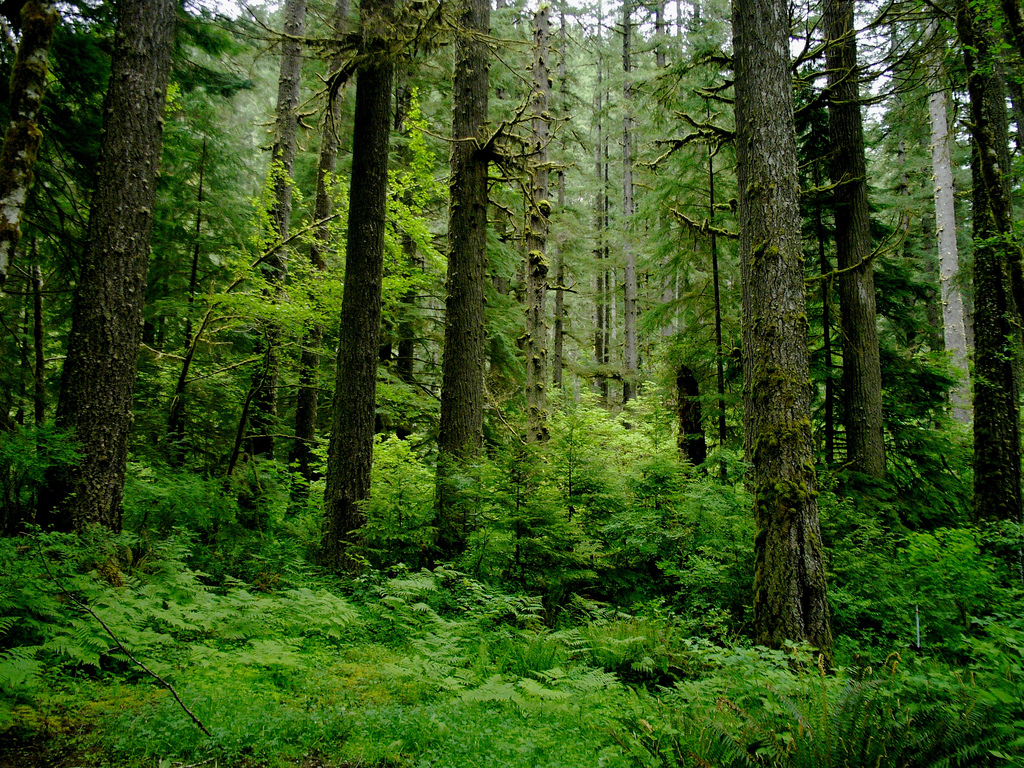
Forests are one of the most important biomes due to their high biodiversity and because of their many ecosystem services. ( https://www.zmescience.com/other/did-you-know/different-types-forests/)
Different Types of Forests
Forests are ecosystems that are dominated by trees. They are found all over the world in a variety of climates and they cover about 1/3 of the Earth’s land surface. There are different types of forests and they are defined by the types of trees and the climate of the region. There are two types of trees, broadleaf and coniferous. Broadleaf trees have large leaves while coniferous trees have needles and use cones to disperse their seeds. Another way to categorize trees are if they are deciduous or evergreen. Deciduous trees are broadleaf trees that lose all of their leaves at the same time. Evergreen trees do not lose all of their leaves at once and stay green year round. These are mostly coniferous trees, although some tropical broadleaf trees do not lose their leaves. The different types of forests are: tropical rainforest, subtropical rainforest, subtropical dry forest, monsoon forest, temperate broadleaf forest, and taiga.
All of these forests have different layers. The forest floor is the soil. This is where tree roots are as well plants and ground dwelling animals. It is difficult for small plants to grow here because the tall trees block a lot of the light. There is also a lot of decaying plant material here as well. There are many types of fungi, such as mushrooms that grow here. They help to decompose the waste on the forest floor. The next layer is the understory. This layer is made up of young trees and taller shrub species. These plant species must also be adapted to grow with low levels of light. The canopy is the next layer and it is made up of the tops of mature trees. The final layer is the emergent layer. This layer is made up of tall trees that extend beyond the canopy. This layer is not found in every forest. Animals can be found in all layers of the forest. Some plants, such as vines grow on trees and can be found in all of the layers as well.
All forests provide similar ecosystem services. The wood from trees provides us with building materials and paper. Important medicines have been created from plants found in forests. Many forests provide us with food from the plants and animals that live in them. Some forests have fertile soils that have been used for agriculture. Forests are also a great recreational resource. Forests can also help protect humans. The trees in a forest can lessen the impacts of flooding by providing a barrier to halt the flow of floodwaters and helping the soil to absorb more of the water. Forests are also incredibly important in the fight against climate change. They absorb carbon dioxide and use it to produce food for themselves in the process of photosynthesis.
Tropical and Subtropical Rainforests
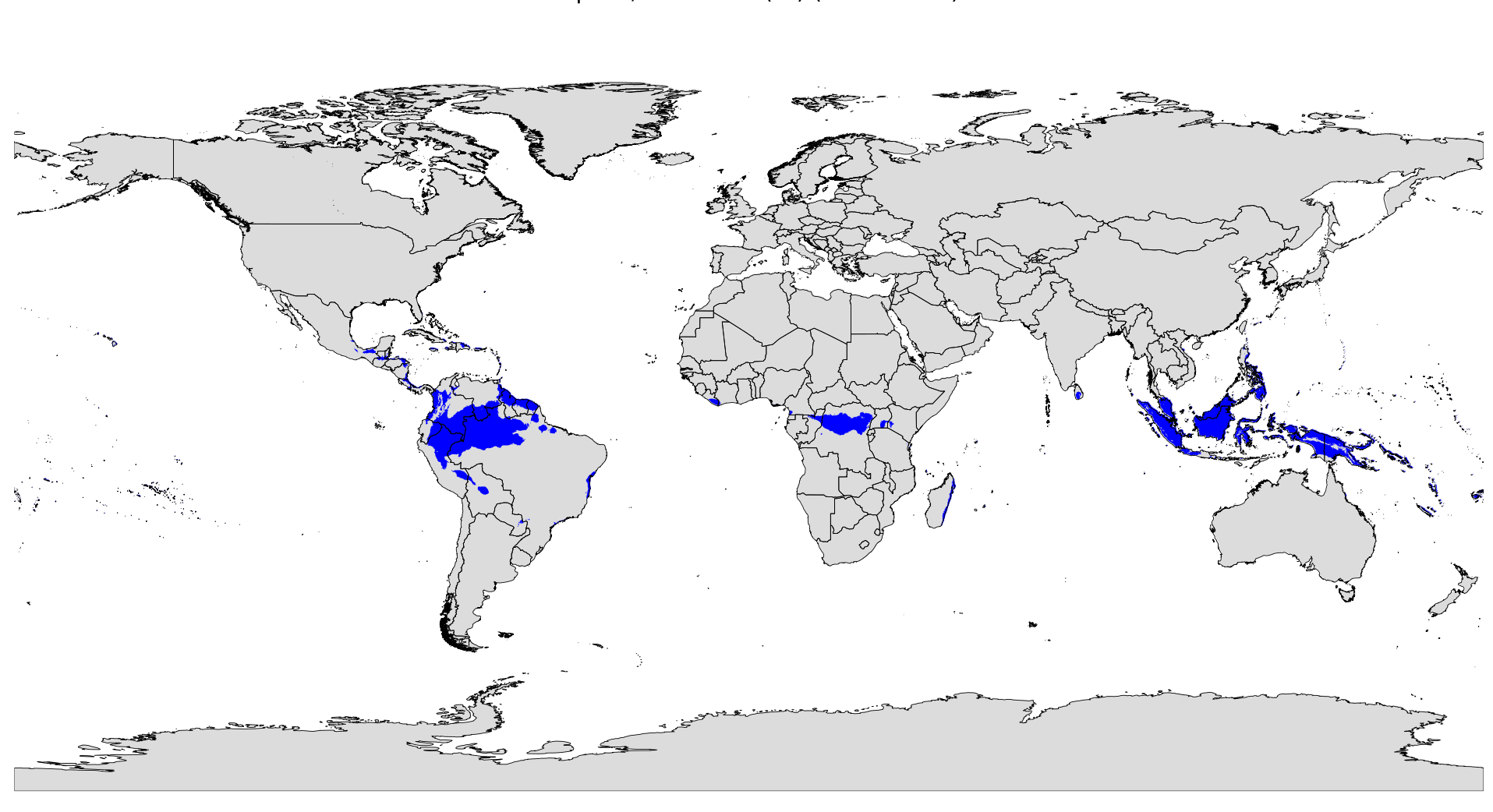
A map of the tropical and subtropical rainforests (https://en.wikipedia.org/wiki/Tropical_rainforest)
Tropical rainforests and subtropical rainforests are very similar. Tropical rainforests are found along the equator. Subtropical rainforests are near the equator, but are a bit closer to the temperate latitudes. They are both hot and humid due to their location on the planet. The typical temperature range is 21- 30 degrees celsius (70- 85 degrees Fahrenheit). The humidity is between 70 and 90%. As the name suggests they receive large amounts of rain, between 60 and 160 inches per year. They have seasonal changes in the amount of rain they receive because of a wet and dry season. The dry season has less rain, but it is usually not completely dry. Subtropical rainforests often have a more distinct wet and dry season. Most of the trees in these forests do not lose their leaves and they are considered evergreen.
The soils in these forests are low in nutrients. Most of the soil nutrients are quickly used by plants or they are washed away by rainwater. This means that the nutrients are mainly stored in the plants. When they die the decomposition process happens quickly because of the diversity of decomposers and because of the high heat. The topsoil that contains the nutrients is very thin. When the forest is cleared for crops it only takes a few years until the soil is no longer fertile.
Tropical and subtropical rainforests have a large amount of biodiversity in a small area. It is estimated that rainforests contain half of the terrestrial species on the planet while only making up 6% of the Earth’s surface. Many of the species living in the rainforests have not been described by science and have yet to be studied.
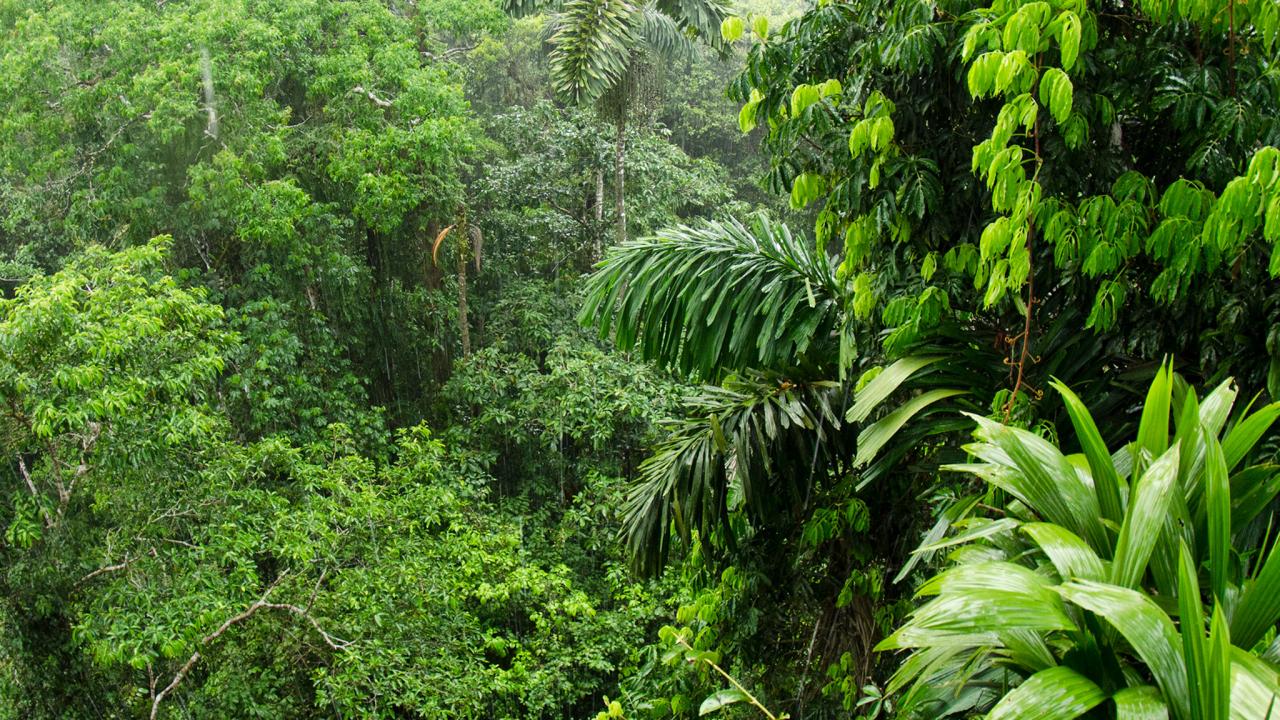
The Amazon Rainforest, the largest rainforest on Earth. (https://www.sciencemag.org/news/2015/03/amazon-rainforest-ability-soak-carbon-dioxide-falling)
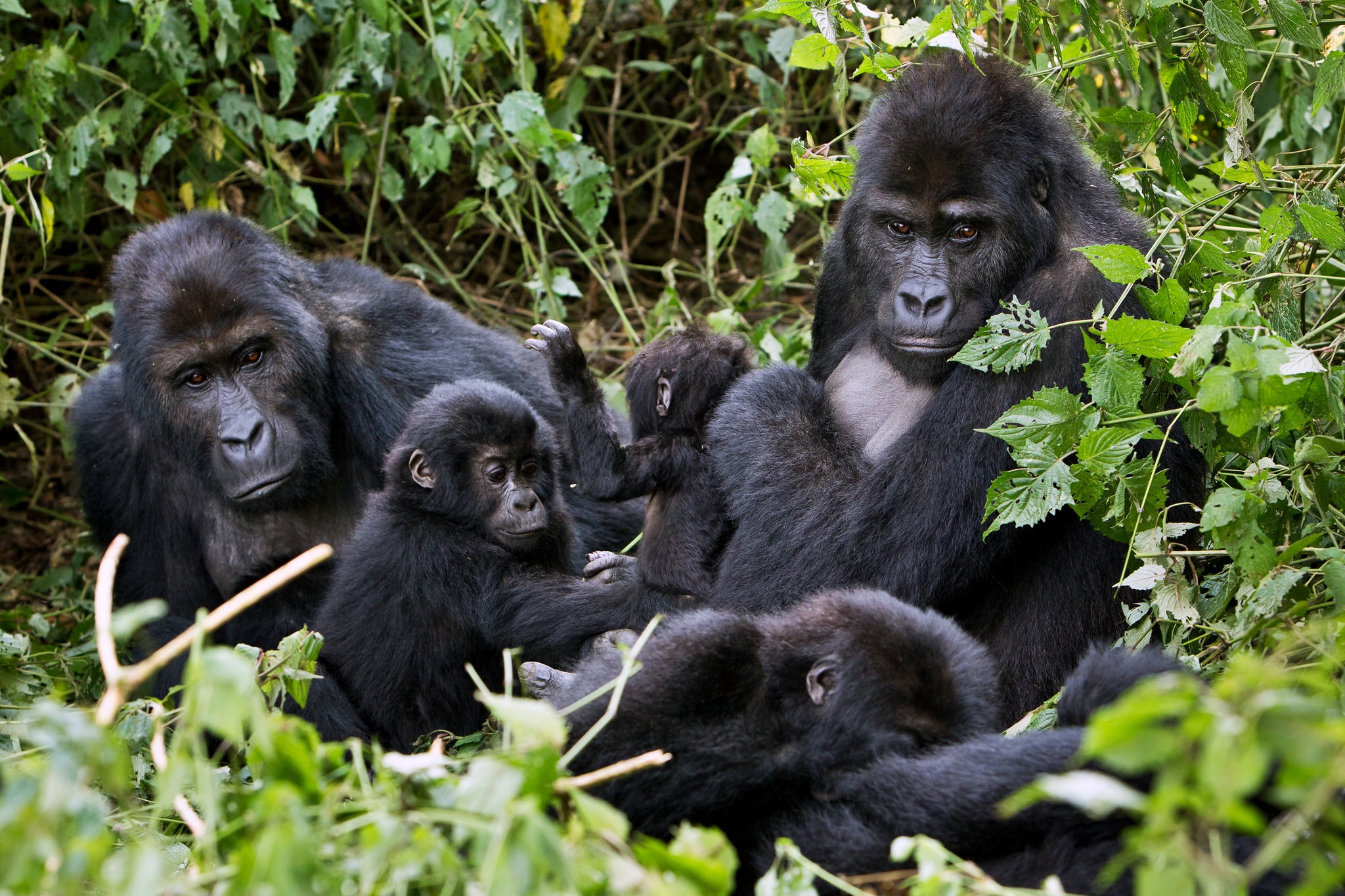
Eastern lowland gorillas are found in the Congolese Rainforest , the second largest rainforest on Earth. (https://www.nytimes.com/2016/04/26/science/victims-of-a-new-african-massacre-gorillas.html)
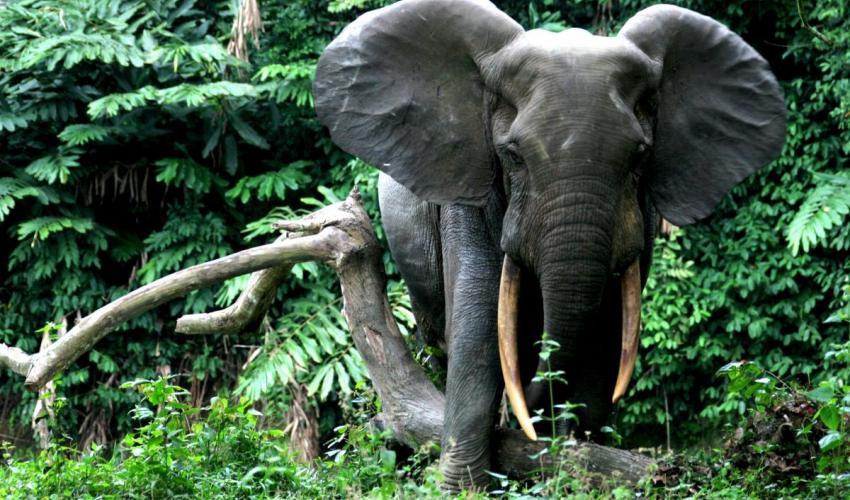
African forest elephants are found in the Congolese Rainforest and are a separate species from elephants found on the savanna. (https://www.iucn.org/news/species/201609/poaching-behind-worst-african-elephant-losses-25-years-%E2%80%93-iucn-report)
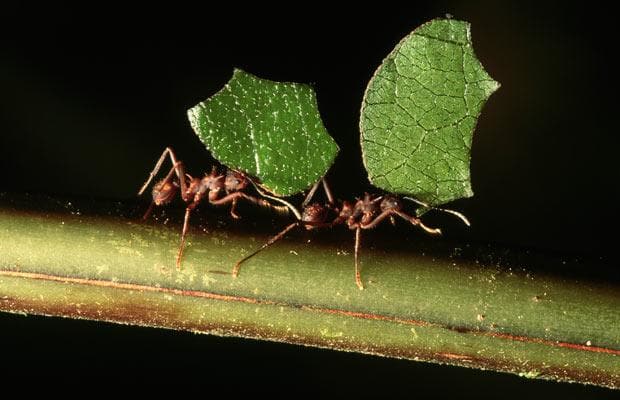
Different species of leafcutter ants are found throughout Latin American rainforests. These are some of the strongest animals in the world relative to their body weight. (http://app.emaze.com/@aoilwfcz/#1)
Subtropical Dry Forest
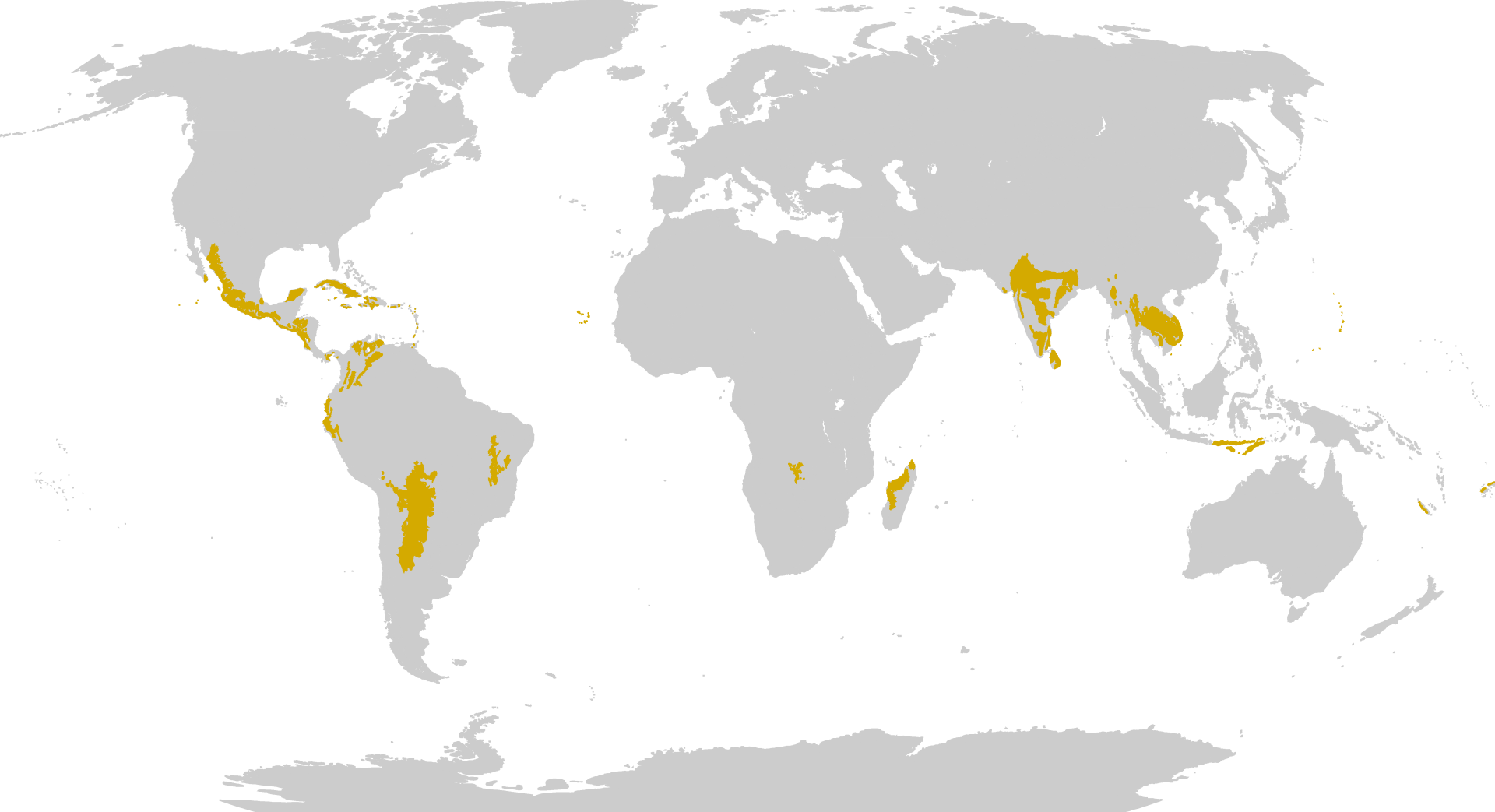
A map of the subtropical dry forests (https://en.wikipedia.org/wiki/Tropical_and_subtropical_dry_broadleaf_forests)
Subtropical dry forests are found in the same regions as the subtropical rainforests. They are usually further north or south of the rainforests where the climate is somewhat drier. They are about the same temperature as tropical and subtropical rainforests. Despite their name, dry forests can still have several hundred centimeters of rain per year. They have a much longer dry season, which can last for several months. Organisms in these forests are adapted to survive the droughts. Many of the trees in the dry forest are deciduous, meaning that they lose their leaves. This happens during the dry season so that the trees can retain water. Without leaves, trees do not block as much of the sun’s light. This helps shorter plants grow on the forest floor. The soils in dry forests are similar to rainforests with nutrients either being used quickly or washed away by rain. Dry forests have a large amount of diversity, although it is much less than the rainforests. Many of the organisms in dry forests are endemic, meaning they are found in only one location. Dry forests tend to be more open which allows for more large mammals.
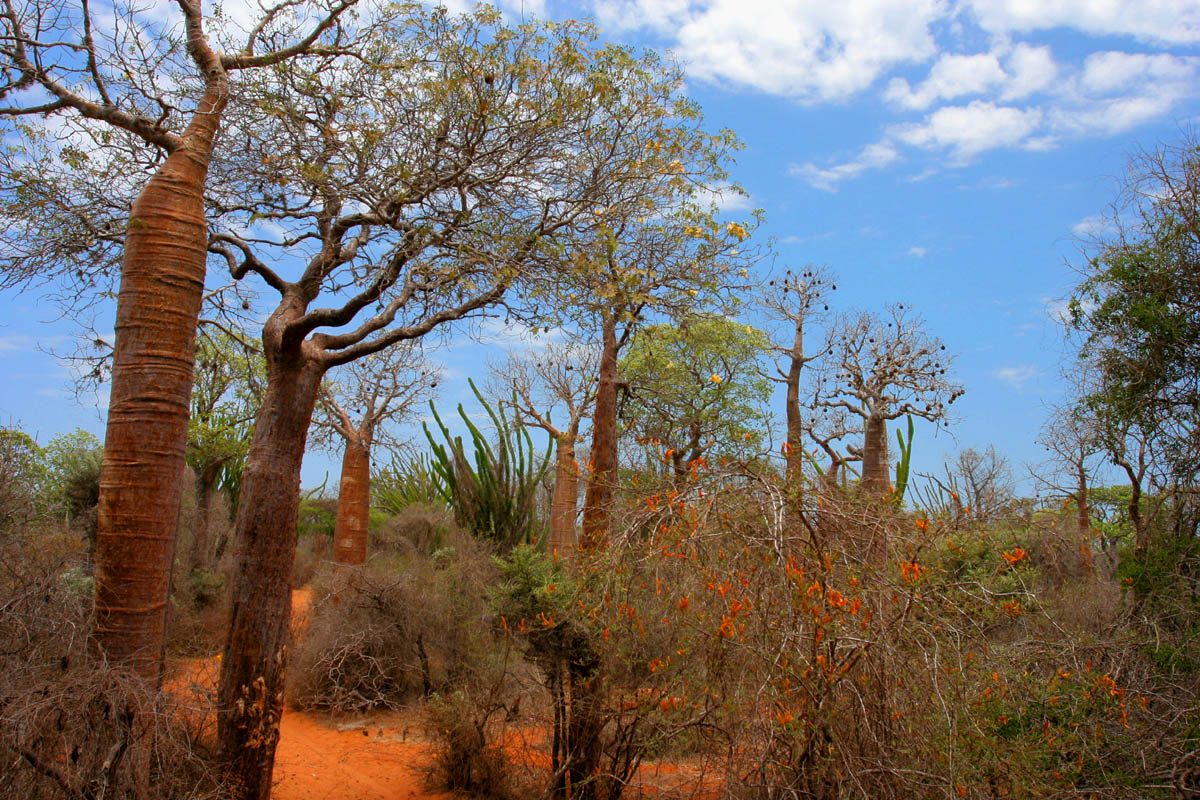
A dry forest in Madagascar (https://en.wikipedia.org/wiki/Madagascar_spiny_forests)
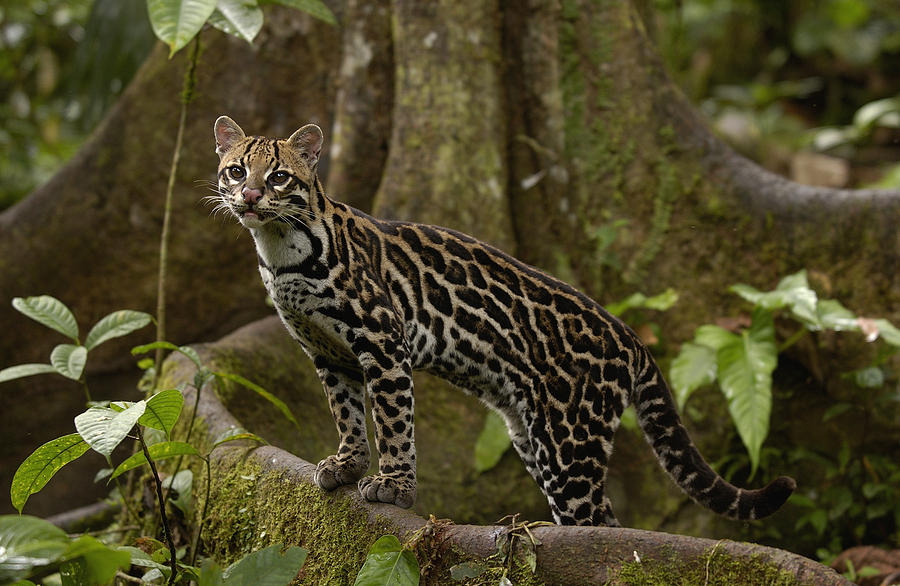
The ocelot is found in rainforests and dry forests in Latin America http://bio227fall2015-07.blogspot.com/2015/12/the-ocelot_2.html
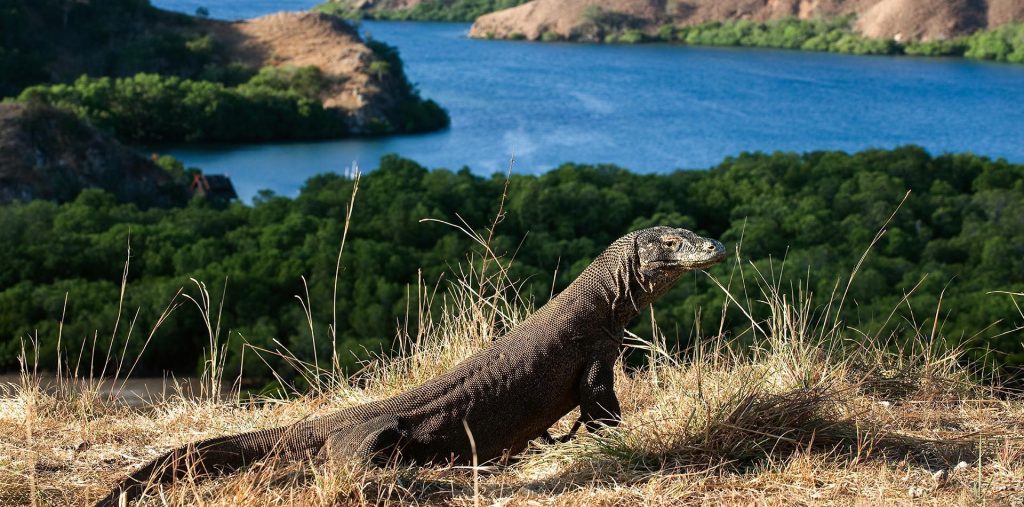
The komodo dragon is native to Komodo Island in Indonesia (https://pranabyatzaro.com/blog/wild-facts-about-komodo-dragon/)
Monsoon Forest
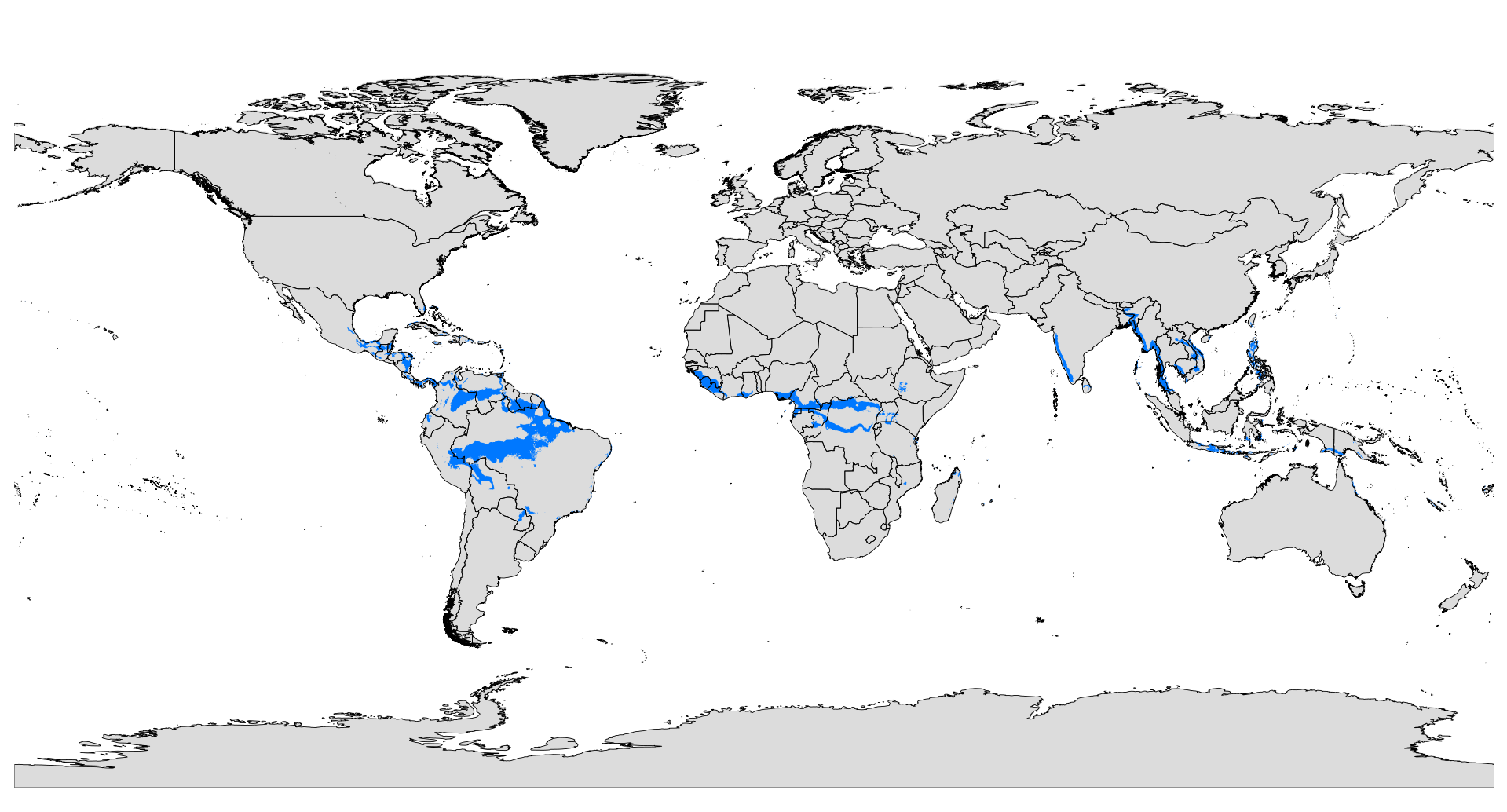
A map showing locations that have monsoon climate (https://en.wikipedia.org/wiki/Tropical_monsoon_climate)
Monsoon forests are a type of dry forest. They are found near the equator and are warm year round because of this. These forests have wet and dry seasons just like other dry forests. The wet seasons are very extreme because of monsoon rains which are caused by the movement of air in the atmosphere. During the dry season the wind blows from the land to the ocean, which limits the amount of precipitation the land receives. The air flow changes during the monsoon season when the wind blows from the ocean to the land. This brings heavy rains and floods. The heavy rains wash away a lot of the soil nutrients just like rainforests and other dry forests.
These forests have a high amount of biodiversity just like the other warm climate forests. A wide variety of plants and animals live here. Plants are adapted to survive the extremes in precipitation. During the dry season trees lose their leaves to conserve water. They also have deep roots to provide stability during floods and to tap into groundwater during the dry season. The leaves also point downward to allow water to run off quickly.
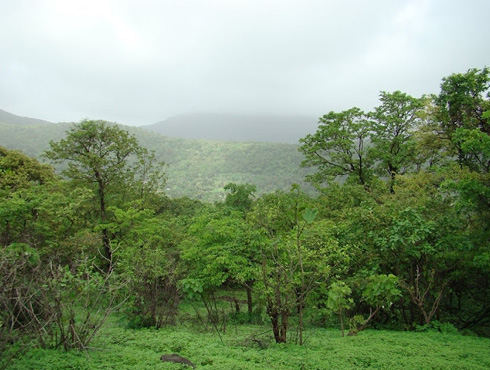
Monsoon forest in India (http://www.geographynotes.com/climate/monsoon-climate/monsoon-climate-location-and-natural-vegetation-climatologygeography/2866)
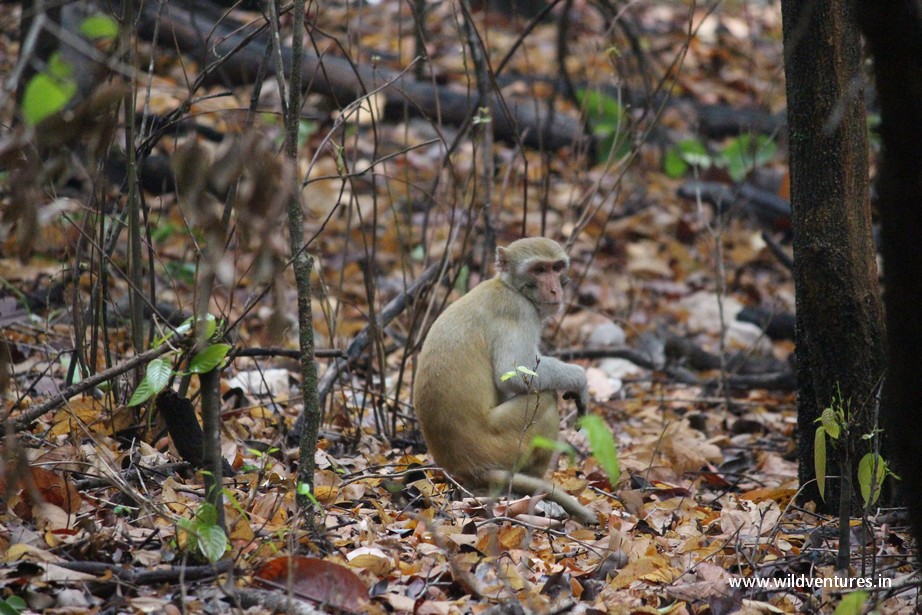
A rhesus macaque, a type of monkey found throughout India (http://wildventures.in/kanha-tiger-reserve-experience/)
Temperate Broadleaf Forest
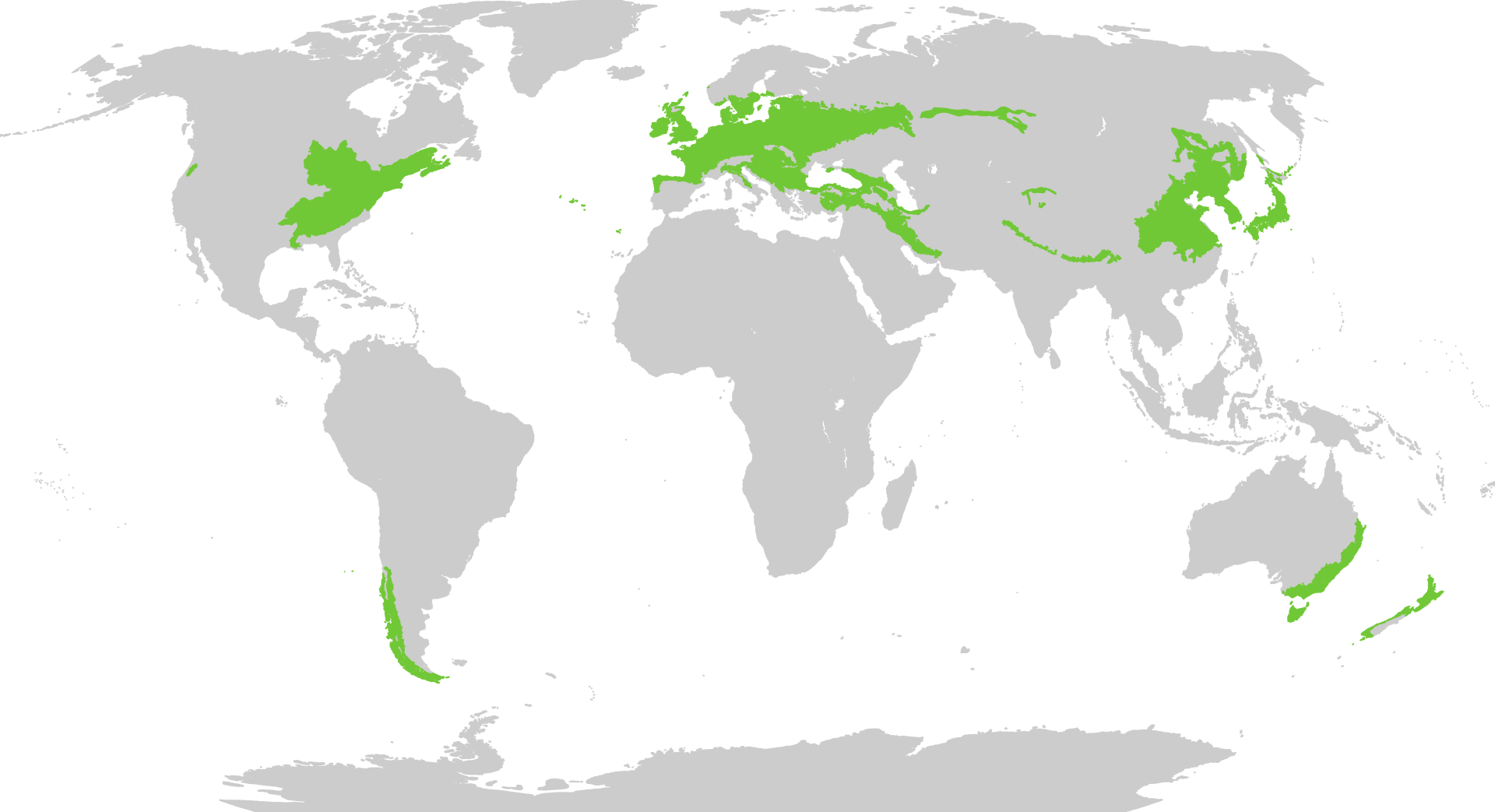
A map showing temperate forests around the world (https://en.wikipedia.org/wiki/Temperate_broadleaf_and_mixed_forest)
Temperate broadleaf forests are made up of deciduous, broadleaf trees although they can also contain coniferous trees. These forests are found outside of the tropics in the temperate latitudes of the Earth. The temperate latitudes experience more seasonal changes than the tropics do. Instead of a wet and dry season there is winter, spring, summer, and autumn. The trees in temperate forests are able to grow for about six months of the year. This happens in the spring and the summer when the temperatures are warmer. The growing season ends in the autumn and winter. These forests are famous for their leaves changing color in the autumn. This happens before the trees lose them to conserve energy for the winter.
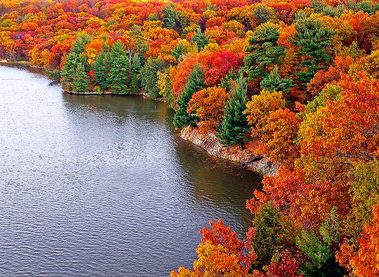
Leaves changing colors in the autumn (https://temperatedeciduousforestsoftheworld.weebly.com/interesting-facts-on-the-temperate-deciduous-forest.html)
The soils in these forests are much different from the soils in the tropical forests. Temperate forests have more nutrients in their soils. This is because there is less rain and the nutrients are not washed away as quickly. These forests have provided one of the best places for agriculture for this reason. Temperate forests receive 20-60 inches of precipitation per year depending on the location of the particular forest. The amount of precipitation is spread more evenly across the seasons, unlike in the tropics.
Temperate forests contain a lot of biodiversity, although this is less than the biodiversity found in the tropics. One reason for this is that the colder temperatures make it harder for some organisms to survive. This is especially true with cold blooded animals, such as reptiles and amphibians.
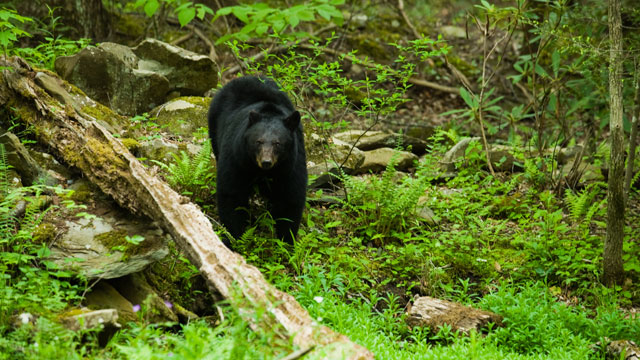
Black bears are found in many forests in North America (https://abcnews.go.com/US/summer-bear/story?id=16976325)
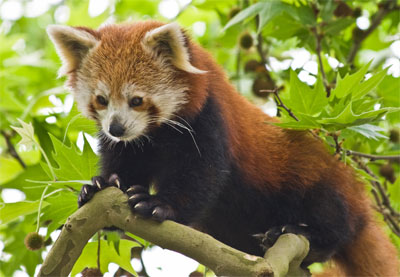
The red panda is native to Chinese temperate forests. (https://www.kidcyber.com.au/red-panda )
Taiga
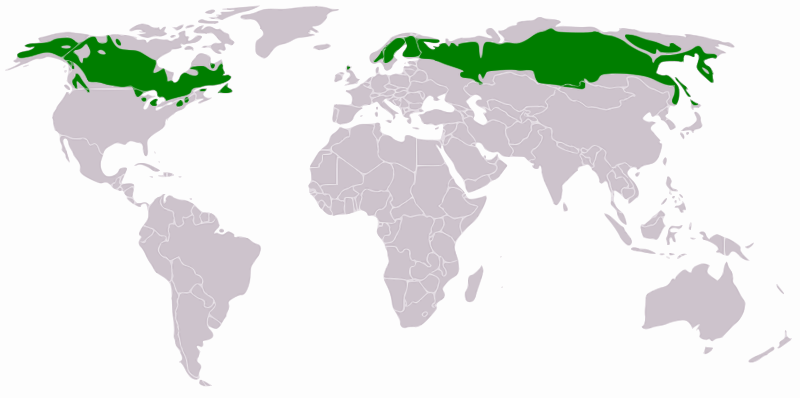
A map showing the distribution of the taiga (https://en.wikipedia.org/wiki/Taiga)
The taiga, also known as the boreal forest, is a forest made up of coniferous trees and it is found just south of the Arctic Circle. They are found in between the temperate broadleaf forests and the tundra. These forests have very short summers and long, cold winters. The coniferous trees that grow here are adapted for these conditions. They have needles instead of leaves, which do not need to be shed prior to winter’s arrival. They also contain less sap than leaves, which prevents them from freezing. Their triangular shape of the trees also allows them to capture as much of the sun’s light as possible for photosynthesis.
The forest floor of the taiga is much different than that of other forests. It is difficult for shrubs and wildflowers to grow here, so the forest floor is dominated by mosses, lichens, and mushrooms. These forests contain permafrost and bedrock. This makes it very difficult for water to drain, which causes the formation of muskegs, a type of shallow bog. The ground in the taiga is wet and spongy because of this.
There are few animals that are able to survive in the taiga year round. Many animals migrate south to escape the harsh winters. The animals that remain are adapted to deal with the cold. Mammals that live here have thick fur coats to keep themselves warm. It can be very difficult to find food in the winter because of the snow. Insects live their lives in the summer and die when it becomes cold. The next generation emerges when it becomes warm again. Very few reptiles and amphibians can live here and the few that do must hibernate to survive the winter.
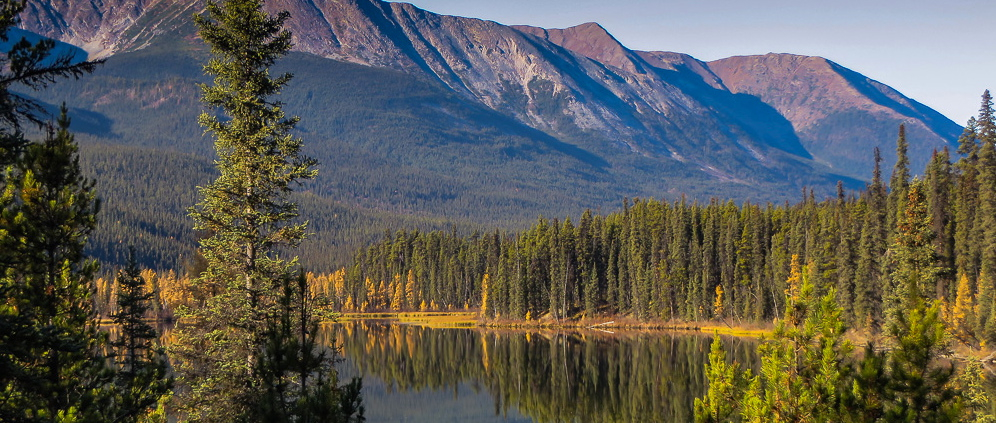
This image shows dense forest near a lake. (https://wildlife.org/boreal-forests-could-hit-climate-change-tipping-point/)
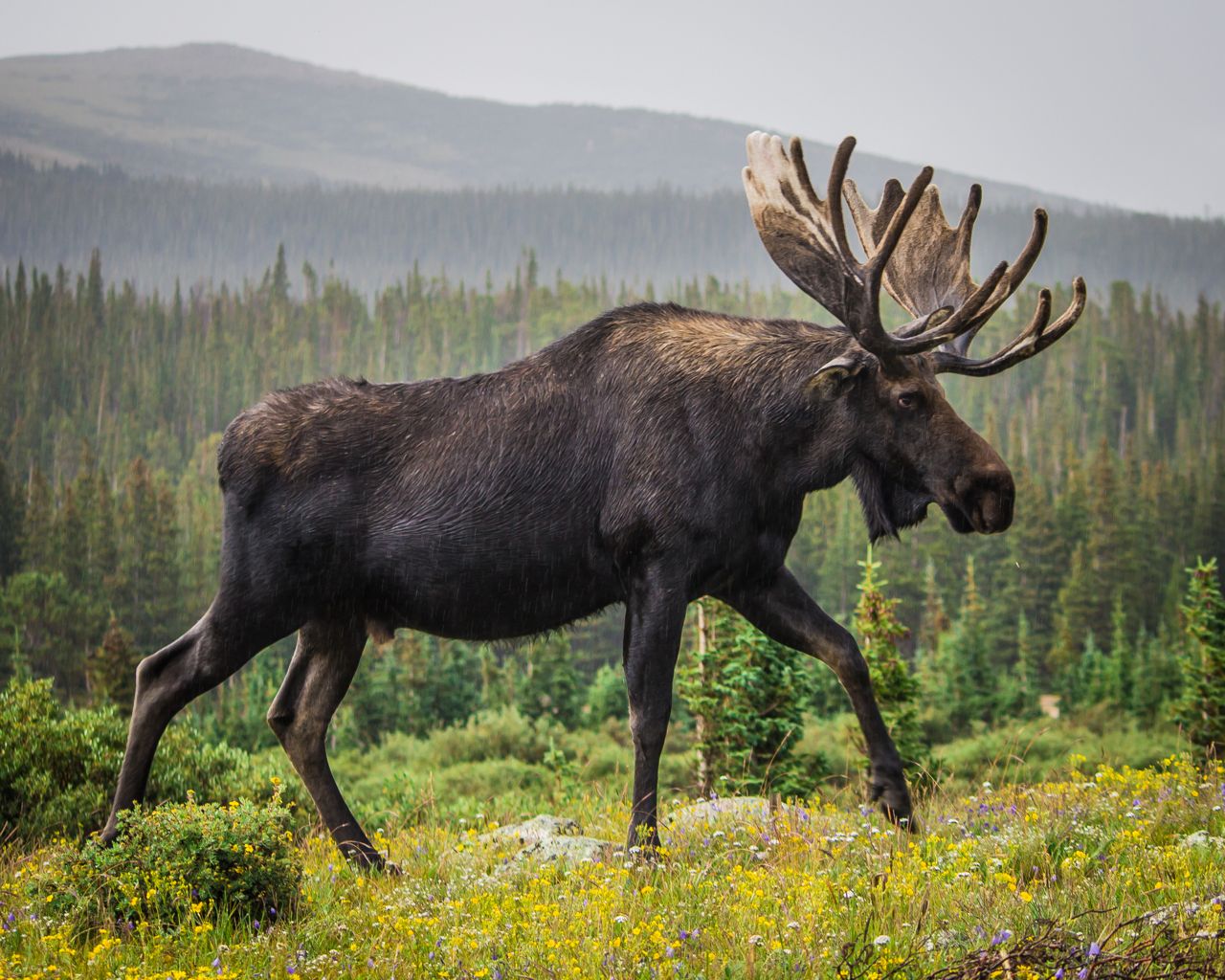
The moose, the largest member of the deer family is found in the taiga. (https://animalsake.com/list-of-different-types-of-deer)
All of these different types of forests are very important for humans and the many other species that call them home. They are also some of the most beautiful and interesting places on Earth. All of these forests should be protected and used sustainably so that future generations can enjoy them as well.
 Science and Nature