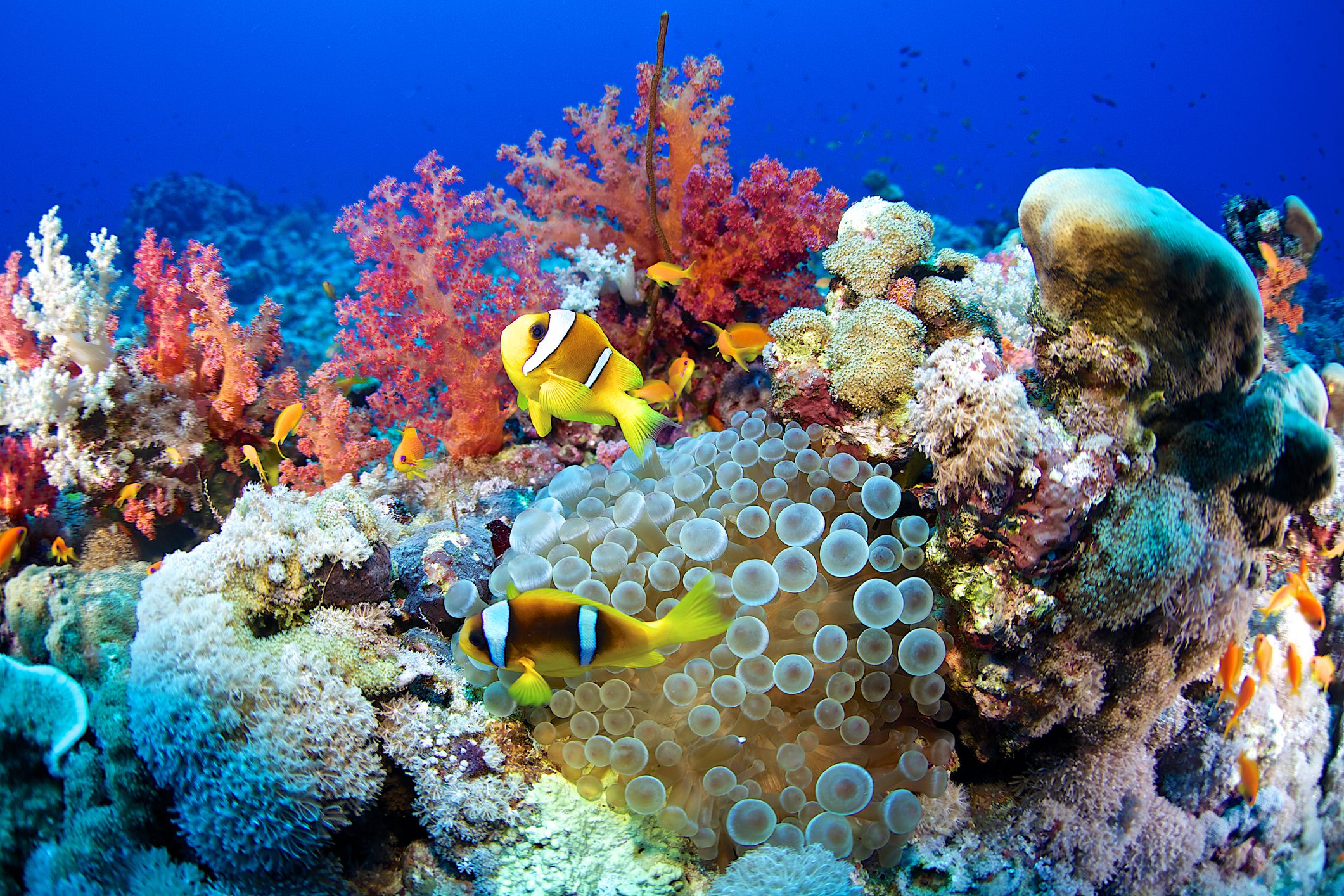
Coral reefs are some of the most beautiful and biodiverse habitats in the world.
What are Coral Reefs?
Coral reefs are one of the most important ecosystems on the planet. They are found in warm, tropical waters in the Indian, Pacific, and Atlantic Oceans. Coral reefs require warm water so most are found near the equator, although they can be found outside of the equator if there is a warm current. They are found along the coasts of continents and islands. Coral reefs contain an astonishing 25% of marine life, but they make up less than 1% of the ocean.
Corals are an animal. They are an invertebrate closely related to jellyfish and sea anemones. A single coral is called a polyp. Their body is sac like with a single opening that serves as both the mouth and the anus. This opening is surrounded by stinging tentacles that are used to capture prey. Most corals prey upon plankton, although some species are able to prey upon small fish. Polyps in most species are small and form colonies. These colonies act as a singular organism. Colonies are formed when a coral larvae settles on the seafloor and goes through asexual reproduction. Thousands of genetically identical buds will come off of the original polyp and start growing next to it. Corals can also start new colonies if pieces of the colony break off and settle somewhere else. This often happens during storms when large waves break branches of coral. Thousands of colonies of different species of corals congregate in the same area and form reefs. The largest of these is the Great Barrier Reef on the east coast of Australia. This reef stretches for 1,400 miles.
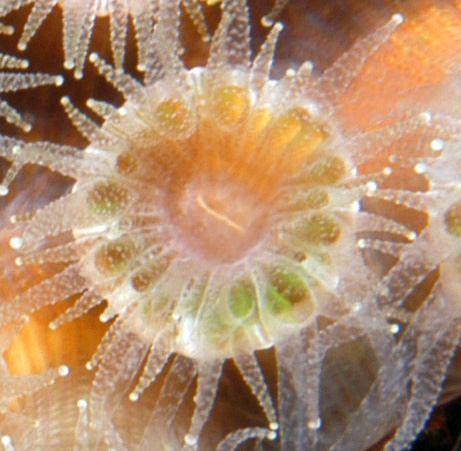
A close up of a single coral polyp.
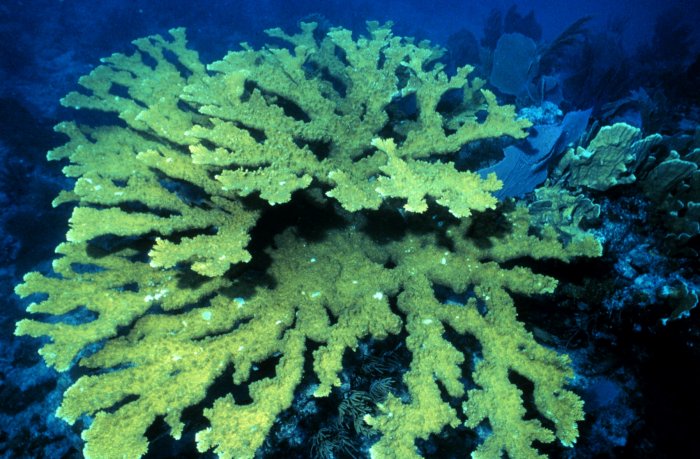
Elkhorn coral, a type of hard bodied coral found in the Caribbean
Some species of corals are hard bodied while others are soft bodied. Hard bodied corals build coral reefs. They excrete limestone, which gives the reef its structure. Hard bodied corals have a mutualistic relationship with a type of algae called zooxanthellae. Both the algae and the coral benefit in this relationship. The coral provides the algae with a place to grow. The algae provides the coral with food that it produces from sunlight during photosynthesis. Hard bodied corals are only found in shallow waters because the algae needs access to sunlight.
Soft bodied corals are not reef builders because they do not secrete enough limestone to build the structure of reefs. Many do not have a relationship with algae and have to capture all of their own food. They can still be found in coral reefs, although some species live in colder, deeper waters.
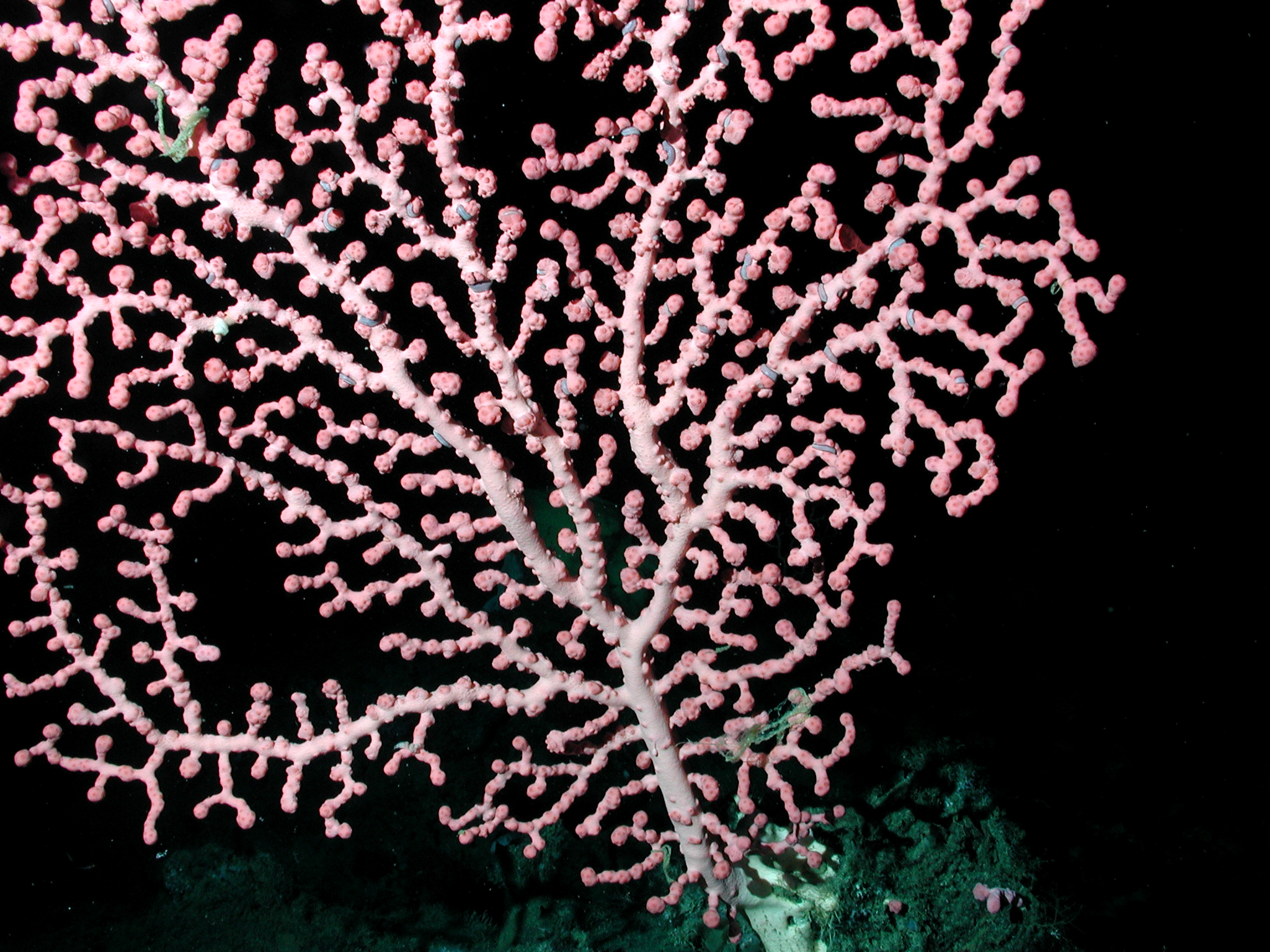
Bubblegum coral, a type of deep water soft bodied coral
Biodiversity
Coral reefs are home to 25% of marine life. Reefs contain a wide variety of marine invertebrates, fish, reptiles, and marine mammals. There are an estimated 4,000 species of fish that live in coral reefs. Coral reefs provide shelter from waves and provide plenty of hiding places for small animals. A large amount of marine predators reside in coral reefs as well. Several species of sharks, groupers, and eels feed in the reefs.
Reefs are maintained by the creatures that live there, but there is a delicate balance on the reefs. If the population of a particular species becomes too large there can be negative effects on the reef. The biodiversity is important, because different species help to keep each other in check. Sharks eat all types of smaller fish, so they help to manage the populations. They are indiscriminate in the species of fish that they eat so they help to prevent one species from taking over.
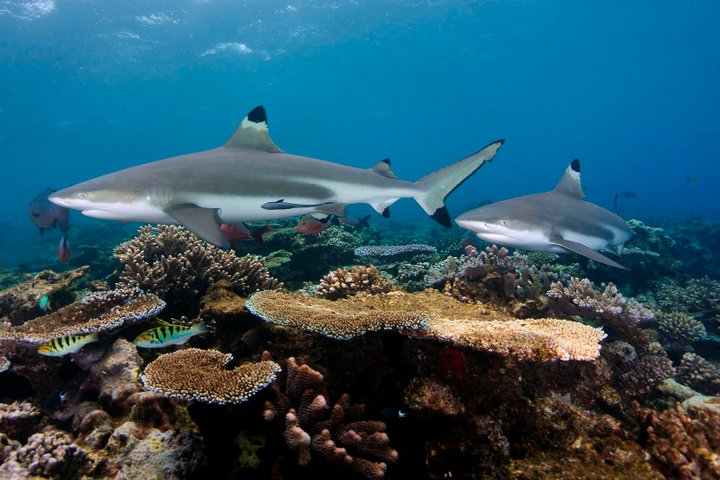
A pair of blacktip reef sharks, one of the top predators on the reef.
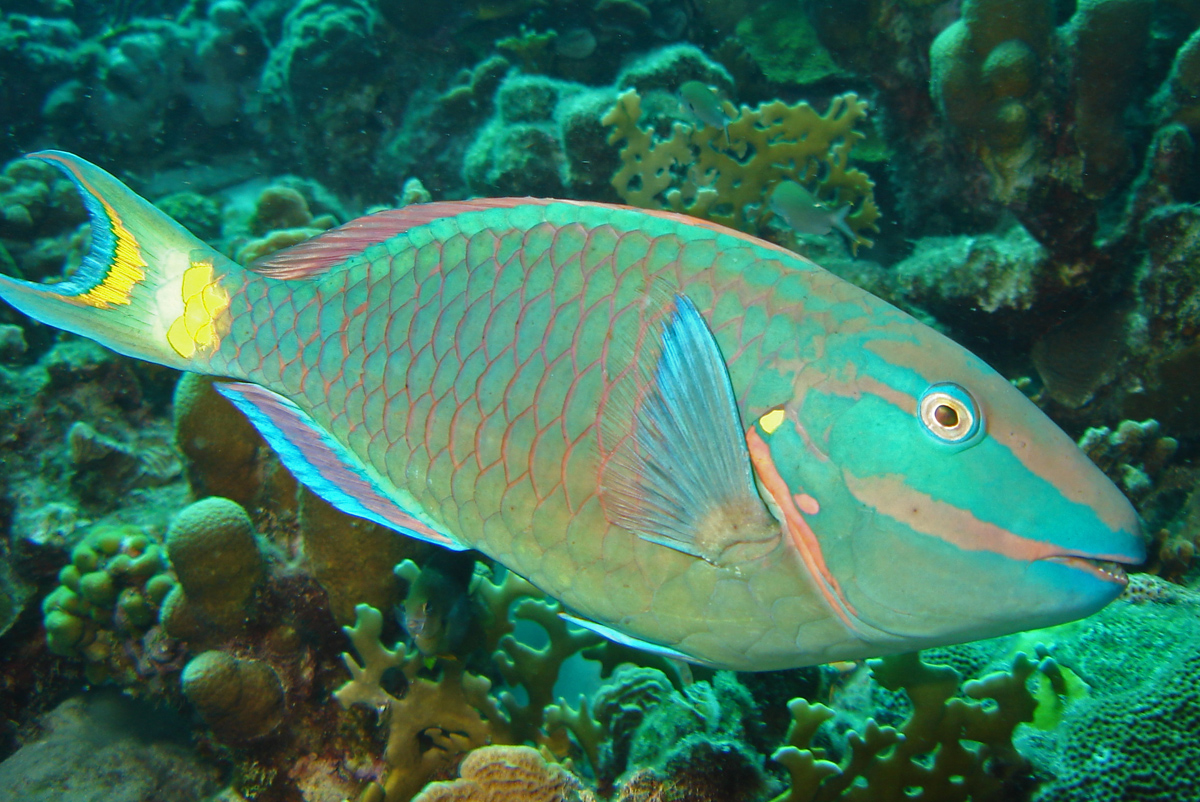
Stoplight parrot fish. Parrot fish eat corals and cause white sand beaches when pieces of limestone pass through their digestive system.
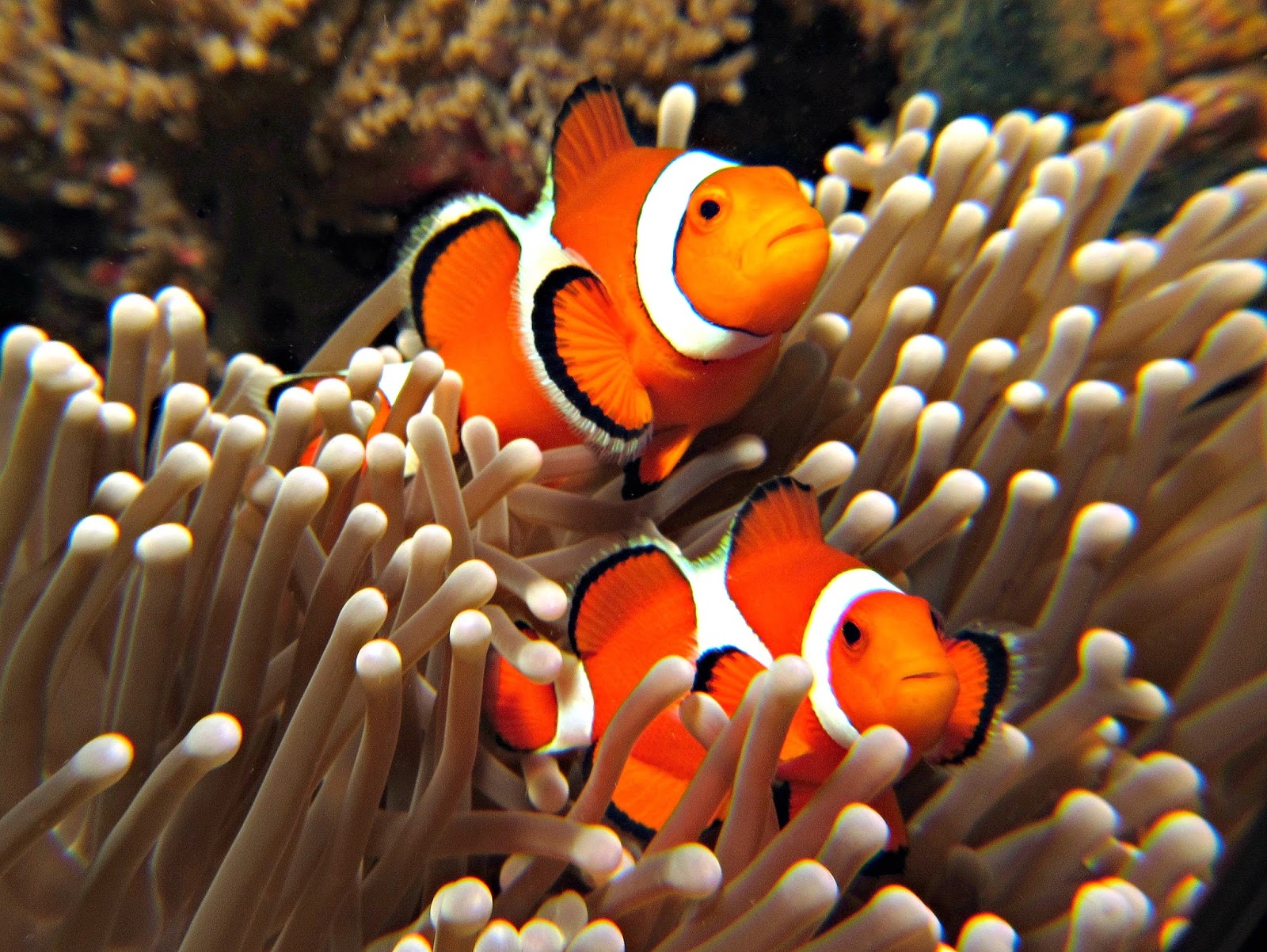
Ocellaris clownfish are one of the most recognizable reef fish. They live in sea anemones for protection.
Ecosystem Services
Coral reefs provide many services that benefit humans. They help to diffuse the energy from large waves. This lessens the amount of coastal erosion and the impact from storms, which is extremely beneficial for coastal development. Man made solutions to this issue are very costly and coral reefs perform this service for free. Coral reefs provide food for many people as well. Many tourists are attracted to the reefs as well. Coral reefs have also been used to develop medicines. Compounds found in coral reefs have been used to treat cancer, HIV, and many other major health issues. There are about 500 million people in the world that live near reefs depend on these services. Many of these people live in poor, developing countries where there are not that many opportunities to make money.
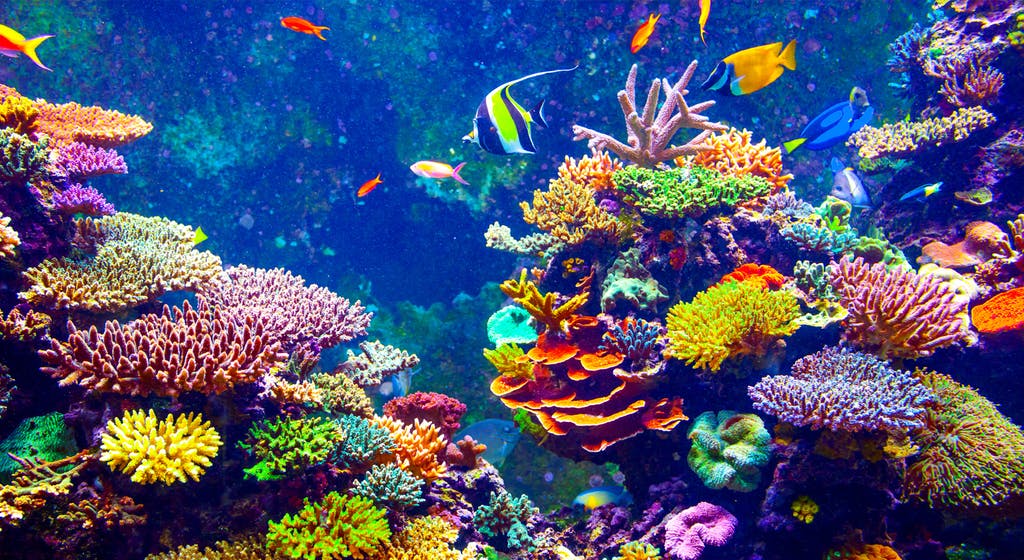
This photo highlights the biodiversity and beauty of coral reefs.
Conservation Issues
Corals are very sensitive animals and they are under threat from human activities. One of the main issues that they currently face is climate change. This is due to emissions of greenhouse gasses, mainly carbon dioxide which has caused the ocean to warm. Carbon dioxide is also causing the water in the ocean to become more acidic. The ocean absorbs carbon dioxide, which causes the formation of carbonic acid. The increased amount of this in the water is making the world’s oceans more acidic. Pollution is another major issue as it can poison the water. Fertilizers cause massive algae blooms when they go into the water. These algae blooms take up all of the oxygen in the water and leave nothing for the other organisms. Plastic pollution causes problems for animals in every habitat on Earth including coral reefs.
This combination of factors can cause corals to become stressed. Stressed corals often expel the algae that they rely on from their cells. When this happens corals turn a ghostly white color and die. This is called coral bleaching and it can kill entire reefs. Without the coral all of the other organisms that live in the reef either have to leave and find a new reef or they die without the protection from the corals. This has become a major problem on the Great Barrier Reef.
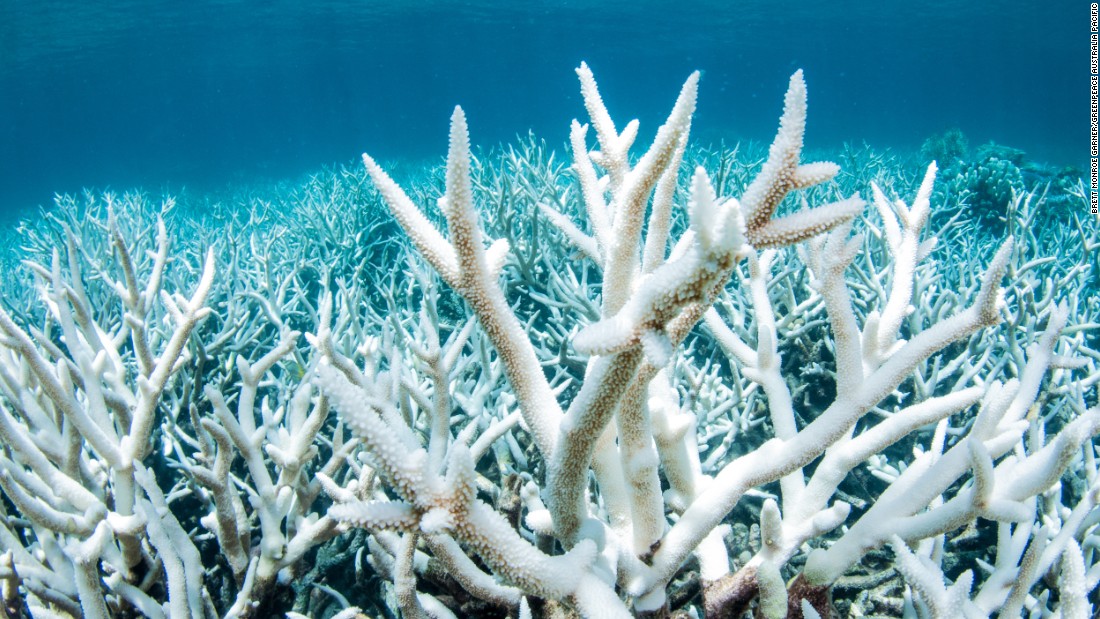
A bleached section of the Great Barrier Reef
Overfishing can cause problems as well. When too many fish are removed it throws the ecosystem out of balance. This prevents the coral reef ecosystem from maintaining itself and leads to the overall habitat becoming degraded. Sharks are an example of this. When shark populations are too low they are not able to control the populations of the other animals on the reef.
How to Help Coral Reefs
Despite these issues it is not too late to save coral reefs. There are many ways that people can help coral reefs even if they live nowhere near the ocean. One way is to drive less. This lessens the amount of carbon dioxide emitted into the atmosphere. Using less electricity helps as well. Turning off lights when they are not needed saves a lot of electricity and can also lessen the amount of carbon dioxide emitted. Doing both of these can also help to save money. Cutting down on the use of plastic, especially single use items like grocery bags and straws can help as well. These items are extremely light weight and can be taken anywhere on Earth by the wind and water currents. It is also important to be purchase sustainable seafood. An excellent source of information on what types of seafood are sustainable is seafoodwatch.org.
It is also important for governments to set aside marine reserves. These are areas of the ocean that are protected from human use. These provide shelter for marine life. Reefs that are protected are also better able to deal with issues like climate change, since they do not have to deal with many of the other issues that coral reefs are facing. These reserves also help fisherman. Large fish populations on marine reserves spill over to unprotected areas where they can be harvested. It is not too late to save coral reefs. With the help of citizens and governments coral reefs can be protected from extinction.
 Science and Nature